
Why this E-Rate cycle deserves a different planning approach:
Discover five ways to make the most of the 2026-2030 Category Two funding opportunity.

The 2026–2030 E-Rate funding cycle gives K-12 districts an important opportunity to strengthen network infrastructure and make the most of available Category Two discounts. As connected learning, cybersecurity, and emerging technologies place new demands on school networks, strategic planning and prioritization are becoming more critical than ever.
With increased Category Two funding now available, K-12 leaders have a timely opportunity to stretch technology budgets and make infrastructure investments that support the next five years of learning. The challenge is not simply accessing funding, but ensuring those dollars are directed toward the network improvements that will deliver the greatest long-term value for students, educators, and IT teams.
To make the most of this E-Rate cycle, here are five ways we think K-12 leaders can approach this E-Rate season more strategically.
1. Build an effective E-Rate plan
A strong plan should go beyond equipment refresh schedules. It should also account for how instructional technology, connectivity requirements, security priorities, and support needs are evolving across the district. A rolling five-year E-Rate plan can help districts track application deadlines, expected service dates, infrastructure projects, budget timing, key decision points, risks, and investment priorities before the application process begins.
2. Understand the E-Rate timeline
The window to submit an FCC Form 470 opens in July and closes at the end of February; it is the first form you file in the application process, establishing your contact information and the new services you will request bids for. Upon reviewing the responses, applicants are then tasked with awarding a Service Provider and filing an FCC Form 471 to seek discounts for services. The window usually opens in December/January and closes at the end of March. Universal Service Administrative Company (USAC) will review each request and send decisions throughout the spring/summer.
Typically, applicants will have a full year to utilize funding before it expires. Understanding this timeline early gives districts more time to evaluate priorities, assess infrastructure needs, and make informed decisions before procurement activities begin.
3. Give yourself time and identify your needs
With your technology roadmap in place, enter each E-Rate cycle with a clear understanding of what your environment actually requires. Not every performance issue points to the same solution, and not every building or classroom has identical needs. Taking time to validate requirements before making funding decisions can help districts prioritize investments more effectively and avoid solving the wrong problem. Once the roadmap is in place, confirm before committing funding that each proposed project addresses the right problem. A current-state assessment can reveal whether performance issues stem from aging equipment, uneven building needs, configuration gaps, or demand that has outgrown the original network design.
4. Know your budget and set realistic expectations
Category Two funding refreshes every five years, and unspent funding does not carry over to the next cycle. For the 2026–2030 cycle, the Category Two school multiplier increased to $201.57 per student, and the funding floor increased to $30,175 for schools and libraries. Those changes create more room for districts to modernize their internal networks — but they also raise the strategic planning stakes.
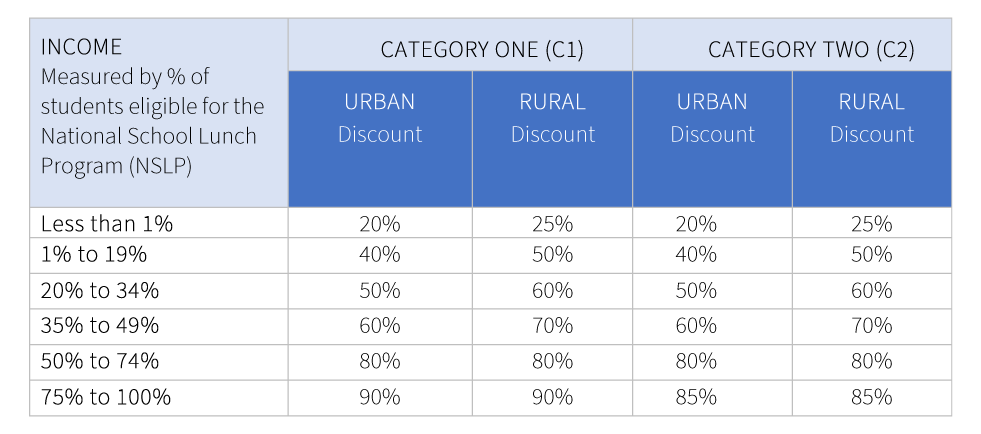
Before finalizing requests, districts should confirm their student counts, understand their discount level, and evaluate whether proposed projects support long-term network performance, security, and classroom connectivity needs. To determine the discount level for your organization, refer to the below National School Lunch Program (NSLP) discount matrix and budget formula (Total number of students x $167). You will calculate and report your discounts on FCC Form 471.
5. Stay up to date with USAC
Regularly reviewing guidance and industry updates can help K-12 districts reassess their assumptions as technology demands, cybersecurity considerations, and infrastructure priorities continue to evolve. For information about upcoming funding commitments, tips on the application process, and other timely updates, subscribe to USAC’s weekly E-Rate News Brief.
You can also sign up for Funds for Learning’s monthly E-Rate webinars to access free online training and community Q&A, led by certified E-Rate management professionals.
The best E-Rate decisions start before funding is committed
The 2026–2030 E-Rate cycle offers districts an important opportunity to invest in network infrastructure that supports both current needs and future demands. While staying on top of timelines, budgets, and program requirements remain essential, the most successful projects begin with a clear understanding of what the district is trying to achieve and why.
By combining thoughtful planning with available E-Rate funding, district leaders can make more informed decisions, prioritize investments with confidence, and maximize the value of this five-year funding cycle.
NEXT STEPS:
As an eligible service provider under the Schools and Libraries Program, SHI is here to help you from sales and procurement support to installation and configuration services, to technical resources and dedicated E-Rate program experts. Start your E-Rate journey by connecting with SHI’s E-Rate team for a free consultation at Erate@SHI.com.
-
 How to decide if a Cisco Enterprise Agreement is right for your business:
Discover why a good partner is critical in managing an effective Cisco EAReading Time: 3 minutesDiscover why a good partner is critical in managing an effective Cisco EA.
Read More -
 Could public sector grant funding unlock your dream project sooner?:
The SHI Grants Support Program provides public sector organizations with complimentary grant services to finance your dream initiatives.Reading Time: 3 minutesDiscover how SHI’s Grants Support Program helps public sector organizations fund their dream technology projects.
Read More -
 How local governments can boost their IT capabilities with SHI:
We equip your agencies with the IT and services they need to succeed.Reading Time: < 1 minuteWe equip your local government with the IT and services you need to succeed.
Read More