
Technology spend needs a better operating model:
How CFOs can improve cloud, SaaS, and software licensing spend management to reduce waste and protect margin.

Cloud, SaaS, and software licensing are often managed separately. For CFOs, that makes waste harder to spot, savings harder to keep, and investment decisions harder to defend. A stronger operating model gives finance, IT, procurement, and business teams a shared way to manage spend before value is lost. That reduces waste, improves forecasting, and creates more room for what comes next.
At the recent SHI Spring Summit, one theme came up repeatedly: organizations are still leaving too much money on the table across cloud, SaaS, and software licensing.
Recent industry research backs that up. Flexera’s 2026 State of the Cloud Report found that wasted cloud spend rose to 29 percent in 2026, the first increase in five years. Zylo’s 2026 SaaS Management Index found that only 54 percent of SaaS licenses are actively used.
This waste is not just the result of missing tools or inattentive teams. The deeper issue is how technology spend is managed.
Why CFOs struggle with cloud, SaaS, and software spend
Fundamentally, it is that most organizations still manage SaaS, cloud, and software renewals in silos, with different data, different workflows, and different owners.
CFOs are being asked to protect margins while funding growth, AI, and modernization. When costs move fast and ownership is unclear, finance is left reacting after decisions have already been made. Without a clear view across the estate, it becomes much harder to shape spend early, before commitments are made and value is lost.
Where cloud, SaaS, and software spend is wasted
Technology waste rarely shows up as one dramatic line item. More often, it appears in less visible ways, including:
- Unused licenses
- Premium SaaS tiers assigned to the wrong people
- Idle non-production cloud environments
- Duplicate tools
- Contracts renewed without enough time or evidence to challenge pricing
On their own, these issues may look manageable. Together, they put real pressure on margin.
Some technology spend should increase because it supports resilience, customer experience, or speed. The problem is that many organizations still struggle to separate high-value spend from low-value drag. When that line is blurry, every budgeting cycle becomes harder than it needs to be and it becomes more difficult to confidently fund the priorities that matter most.
Why one-time cost optimization efforts do not last
Most organizations have had a savings win somewhere. A renewal review uncovers shelfware. A SaaS rationalization exercise removes unused apps. A cloud optimization sprint cuts the monthly bill. Those wins matter, but they are often treated as isolated projects instead of part of an ongoing discipline.
Without clear ownership, repeatable workflows, and regular review points, the same waste comes back. SaaS sprawl returns. Cloud costs drift upward. Software renewals become reactive again. Finance gets a short-term win, but not a lasting change.
Why technology spend management breaks down
If waste keeps reappearing across cloud, SaaS, and software licensing, the real issue is not the technology itself. It is the operating model around it.
Decentralized purchasing, incomplete inventories, fragmented usage data, weak ownership, and tactical renewals all point to the same gap: the organization has not built a durable way to govern technology spend across its lifecycle.
That matters to CFOs because weak operating models do more than create waste. They reduce forecasting confidence, weaken negotiating leverage, and make it harder to assign accountability. They also make it harder to move money toward the priorities the business really cares about.
What better technology spend management looks like
A better model starts with a simple shift. Technology spend cannot be managed well as a series of one-off interventions. It must be managed as an ongoing business process. That means moving from administrative renewal behavior to continuous decision-making.
In practice, that means better visibility, defined lifecycle workflows, and shared accountability. Finance, IT, procurement, engineering, and application owners need a shared view of what the business owns, what it uses, what it costs, and who is accountable for it. When people are working from the same information, spend becomes easier to manage and easier to justify. This becomes even more important as organizations invest in areas where costs move quickly and value is harder to measure, requiring stronger governance and earlier decision-making.
The goal is not to drive every cost as low as possible. It is to separate spend that is creating value from spend that is surviving on inertia. That is a better financial discipline, and a more useful way to protect margin.
How to create value across the technology lifecycle
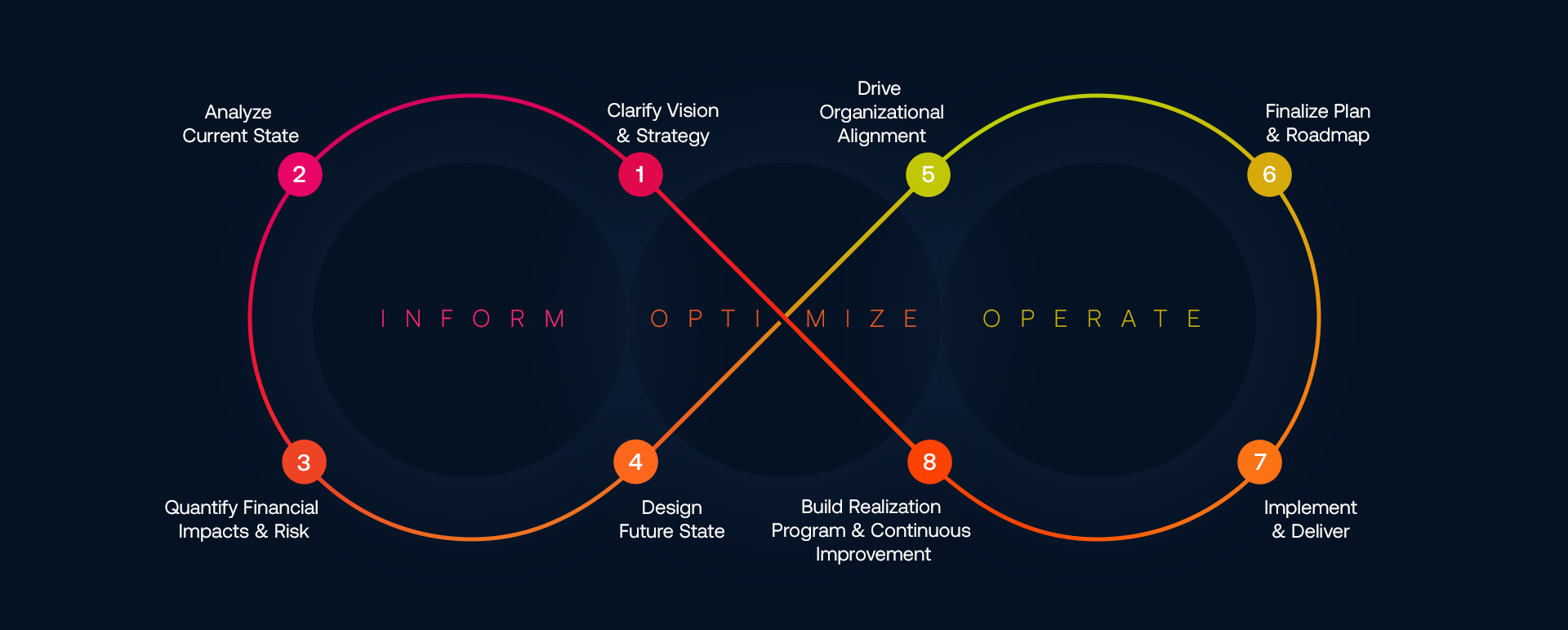
The SHI Spend Optimization Delivery Framework – creating value across the technology lifecycle
For CFOs, the real opportunity is not just to reduce costs at renewal. It is to make sure technology investments keep earning their place from sourcing and provisioning through day-to-day use, optimization, renewal, and retirement. When organizations focus only on the purchase point or the contract deadline, they miss too many chances to improve value in between.
That is true across cloud, SaaS, and software licensing. Better intake decisions reduce duplication before it starts. Clear ownership and usage data helps teams make smarter calls while spend is active. Stronger optimization and renewal discipline protect budget before contracts roll forward. In practice, that starts to look different across each part of the technology estate.
How to improve cloud, SaaS, and software licensing spend
In cloud, cost needs to be visible early enough to influence behavior. Rightsizing, automated shutdowns, cleanup of unattached resources, and stronger retention policies all help, but only when they are part of normal operations.
In SaaS, visibility alone will not stop sprawl. Organizations also need approved catalogs, clear ownership, regular usage reviews, and renewal playbooks that begin well before the deadline.
In software licensing, better usage data, benchmarking, harvesting, tier optimization, and portfolio rationalization improve both savings and negotiating leverage. When vendors are met with evidence instead of urgency, the conversation changes.
Which technology spend metrics matter most
The most useful metrics are not just the ones that show whether the bill went down. They show whether the organization is getting better at making intentional decisions. That includes total spend and spend growth rate, but also forecast accuracy, the share of renewals with optimization action, the amount of underused spend being removed, and how clearly ownership is assigned across teams.
The right question is not whether spend increased. It is whether the increase was intentional, visible, and tied to value. That gives CFOs a stronger basis for decision-making than cost reduction alone ever will.
Why technology cost optimization matters now
Technology optimization is not just a cost exercise. Done well, it creates investment capacity. Money recovered from idle cloud resources, underused licenses, duplicate SaaS applications, and poorly prepared renewals can be redirected toward AI, modernization, resilience, and growth.
In short, optimizing technology spend now means organizations can fund what comes next.
How SHI helps improve technology spend management
If your organization is trying to get more value from cloud, SaaS, and software licensing, the right place to begin is with an assessment. It gives you a clear view of your current position, your appetite for improvement, and the gaps between where you are and where you want to go.
It looks across people, process, technology, and commercial arrangements to help chart a practical path forward. For CFOs, that means a stronger foundation for reducing waste, improving control, and funding what comes next.
NEXT STEPS
Start with an assessment to see where value is being lost today, and what it will take to recover it. Connect with an SHI expert today.
Speak to an SHI expert
-
 Avoid unknown risks in the era of cloud, SaaS, and AI with 7 best practices:
Don’t gamble with evolving risks — get actionable strategies to prevent, manage, and remediate them.Reading Time: 6 minutesDon’t gamble with evolving risks — get actionable strategies to prevent, manage, and remediate them.
Read More -
 ITAM and FinOps: Why a unified IT strategy is essential to control costs:
An “all for one and one for all” approach can drive you (and your ROI) forward.Reading Time: 5 minutesAre your systems working together, or are you fighting silos and inefficiencies?
Read More -
 Why ITAM practitioners must evolve for the AI and FinOps era:
AI is changing ITAM. FinOps can help practitioners keep up.Reading Time: 6 minutesWhy ITAM professionals need FinOps skills to manage AI, cloud, and SaaS spend.
Read More