
New year, new influence: Securing executive support for IT initiatives:
Often, it’s an understanding of psychology, not technology, that enables CIOs to lead successfully.

This reality presents a challenge for technology leaders who discover, as they advance, that the technical skills that made them standout developers and engineers don’t translate into executive influence. In fact, Korn Ferry’s Workforce 2025 Global Insights Report found that 43% of senior executives doubt their own leadership abilities — making executive support for IT initiatives feel even further out of reach.
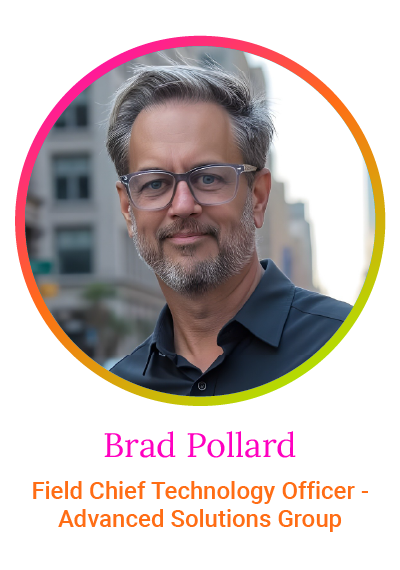
SHI Field Chief Technology Officer Brad Pollard says, “As a technology executive with an educational background in psychology, I’ve seen firsthand how influence can be the most powerful tool in a CIO’s toolbox.”
The start of a new year is the perfect time to reset your strategic mindset and strengthen the capabilities that drive influence ― so your initiatives earn the visibility, advocacy, and budget they need to succeed.
Three ways to boost your exec influence
1. Shift your language use from technology manager to strategic partner.
The challenge in securing executive buy-in for IT priorities isn’t that CIOs are doing the wrong work or measuring the wrong things — it’s a disconnect between what CIOs are talking about and what the business cares about.
When you tell an executive board that IT closed 5,000 tickets, you frame IT as a help desk — and yourself as its operator. Worse, it invites questions like, “Why were there 5,000 tickets open in the first place?” Instead, speak the language of the business and link to IT’s action and impact. For example, if you’ve allocated resources to a CRM project, position it as: “CRM is critical to revenue and growth. We’re currently seeing a downtick in CRM performance and usage, and we’re investigating why.”
Finessing your communication may feel like a low-impact tip to analytical-minded leaders, but it’s often a serious blind spot. Grammarly’s latest State of Business Communication report found that while 82% of senior leaders perceive their communication as effective, only 68% of their teams agree.
How SHI can help:
Connecting with peers and learning from experts can uncover blind spots, spark new approaches to organizational challenges, and accelerate professional growth. SHI hosts in-person executive briefings and summits throughout the year, giving CIOs the space to step out of the day-to-day and gain fresh perspectives.
2. Report three metrics that show your business understanding.
The c-suite doesn’t want more data ― they want clarity. Your value as a CIO lies in connecting technology to business outcomes, not drowning leaders in tactical detail. Zoom out and focus your reporting on three metrics that matter. We recommend digital employee experience (DEX), cyber risk quantification (CRQ), and AI adoption.
Here’s why:
DEX:
IT should always strive to make it easy for people to do their work. To measure IT’s impact on your workforce, consider tracking DEX metrics such as system performance, help desk ticket trends, or employee sentiment and satisfaction related to digital tools. Reporting on DEX demonstrates you prioritize how technology supports people — not just systems — and connects IT investments to tangible outcomes like improved employee experience and increased productivity.
CRQ:
Executive teams operate under constant pressure, knowing a breach could happen at any moment. Technology leaders must go beyond simply reporting on operational security activities. Instead, they need to assign clear monetary values to potential threats and present risk quantification data in a format that enables informed executive decision-making. Using annual loss expectancy (ALE) helps to reframe the conversation from technical details to measurable business outcomes — dollars protected, revenue and brand safeguarded — ultimately giving leadership the confidence they need to focus on the bigger picture.
AI adoption:
AI is a critical growth lever, and CIOs in every industry face mounting pressure to implement it in meaningful ways. Executives operate under the hypothesis that AI will drive efficiency, and ultimately profitability — but it’s the CIO’s job to demonstrate how. We suggest using your organization’s business impact analysis (BIA) document to identify processes with high “AI potential,” then track improvements as AI is applied. This not only shows where technological investments deliver measurable innovation but also positions IT as a strategic driver of transformation rather than a cost center.
Distilling complexity into three strategic indicators shows you’re shaping business outcomes — not just managing technology. Be sure to share these widely too, as transparency builds trust. According to DDI’s latest Global Leadership Forecast, senior leaders who build trust are 2.8X less likely to encounter resistance to AI initiatives.
How SHI can help:
When strategic technology investments hinge on the details, you need guidance tailored to your organization. Our Thought Partnership Exchange within our Strategic Technology Office leverages our Field CISOs and Field CTOs to help you craft strategies to solve your most complex IT and business challenges.
3. Prioritize cross-functional partnerships and “emotional handshakes”.
IT doesn’t operate in a vacuum, and neither should CIOs. To succeed as a business partner, build relationships across the organization and practice “emotional handshakes” (rapport, sincerity, active listening) in all your interactions. Start by asking functional heads simple questions like “What does your team do every day?” to uncover priorities and pain points.
Why this matters:
Reduces assumptions:
Understanding operational roadmaps — even outside IT — helps you align ideas with business goals and shows how IT adds value.
Strengthens executive presence:
Partnerships turn you from “the IT person” into a strategic ally, backed by advocates who can speak to your impact.
Ensures right-time engagement:
When stakeholders understand IT’s role, you’re involved early — shaping solutions proactively and avoiding costly rework.
Additionally, emotional intelligence amplifies bottom-up and top-down influence. In fact, a 2025 Harvard Business Impact Report found emotional and social intelligence ranked as the top-rated leadership capability among 1,150 L&D and functional business leaders.
How SHI can help:
Executive buy-in and budget cycles don’t always align. Even when leadership supports IT investments, cash flow constraints can delay large upfront technology purchases. SHI Capital offers flexible financing and leasing options so you can secure the tools you need now — without waiting for the next budget approval window.
Influence: The bridge between LEGO bricks and leadership
None of us grew up sitting on the floor with our LEGO set dreaming of becoming strategic technology leaders. Yet for many engineers, technical excellence eventually leads to a seat at the leadership table — and the realization of a skills gap.
In the age of AI and rapid skills landscape changes, it’s tempting to double down on hard skills. But as this article explored, influence — not just innovation — is what separates good technology leaders from great ones.
Securing executive buy-in requires more than technical know-how; it demands three fundamentals:
• speaking the language of the business;
• reporting metrics that matter; and
• building partnerships grounded in trust.
Harvard Business School researcher Letian Zhang reinforces this point through both evidence and experience. His recent faculty research underscores the growing importance of soft skills, and his own academic background — a Ph.D in sociology from Harvard and a B.S. in mathematics from Stanford —showcases the connection between technical and human insight. As Zhang explains, “Highly specific, advanced technical skills are obviously important, but fundamental skills are actually really important too, if not more important.”
Heading into the new year, remember: mastering these fundamentals doesn’t just elevate IT — it transforms your role from managing systems to shaping the future. And that kid with their LEGO set? They would have been excited about that.
NEXT STEPS
Ready to level up your influence? Connect with one of our experts to see how SHI can enable your strategic IT initiatives.
Brad Pollard is a seasoned technology executive and Field CTO at SHI, leveraging 30 years of experience building IT ecosystems that drive corporate growth. He has led two companies from startup through IPO, including key technology leadership roles at Tenable and Sourcefire. Brad specializes in digital transformation, strategic frameworks, and scaling organizations, guiding customers and partners with actionable insights and proven expertise.
Speak with an SHI expert
-
 Seeing the big picture: What is the future of collaboration in the hybrid workplace?:
Make your modern workplace successful for the long term.Reading Time: 5 minutesMake your modern workplace successful for the long term.
Read More -
 Avoid unknown risks in the era of cloud, SaaS, and AI with 7 best practices:
Don’t gamble with evolving risks — get actionable strategies to prevent, manage, and remediate them.Reading Time: 6 minutesDon’t gamble with evolving risks — get actionable strategies to prevent, manage, and remediate them.
Read More -
 How improving clinical mobility helps achieve Quintuple Aim:
To foster great patient and clinician experiences, start by modernizing the devices your people rely on.Reading Time: 5 minutesTo foster great patient and clinician experiences, start by modernizing the devices your people rely on.
Read More