
Why enterprise SMS still matters in the age of collaboration platforms:
SMS doesn't replace enterprise collaboration platforms, but it can be critical during system outages, safety/weather incidents, and multilingual communications.

Urgent communication fails the moment an organization assumes its workforce is always reachable. On any given day, people scatter across job sites, airports, customer locations, and home offices, each shifting between devices and networks without a predictable pattern.
That unpredictability undermines every operational effort. IT teams try to drive fast incident response while half their on-call rotation is away from a laptop. Safety teams try to reach traveling employees during disruptions. Business units try to coordinate with contractors who never log into corporate systems. Each group believes it has the right tools, yet messages still go unseen when timing matters most.
SMS changes the equation.
Its universality gives organizations a direct line to the people who matter at the moment they matter, regardless of platform, location, or role. That capability opens the door to faster acknowledgments, cleaner escalation paths, and broader coverage across audiences that traditional channels struggle to reach.
The challenge lies in embedding SMS into enterprise workflows without disrupting them.
Why SMS when every organization already has communication platforms
The answer reveals itself during the first major incident when half the on-call rotation doesn’t respond because they’re not logged in, or during the first severe weather event when employees miss alerts because they’re commuting without checking work apps.
Communication platforms require active sessions and stable connectivity. Field technicians working in manufacturing plants don’t necessarily have laptops open. Contractors at construction sites don’t typically access corporate networks. Employees traveling internationally may not have reliable data coverage. Road warriors juggle multiple apps across personal and work devices. The on-call rotation includes people who deliberately silence work notifications after hours to maintain boundaries between professional and personal time.
SMS bypasses all those constraints. SMS maintains a 98% open rate compared to email’s 20%, with 80% of people checking texts within five minutes. When a P1 incident requires acknowledgment within minutes, or when severe weather demands immediate action, that engagement gap determines whether operations continue or collapse.
The channel reaches a phone number. No app to install, no login to maintain, no corporate network required. When an IT service management (ITSM) platform triggers an SMS alert, it lands on the recipient’s lock screen whether they’re at a desk, on a job site, or in transit. They can acknowledge with a reply, escalate with a text, or confirm they’re responding — all without opening a laptop or launching an app.
Organizations implementing SMS this way don’t replace existing collaboration platforms. They extend enterprise communications to the people and situations where those platforms fall short.
Three operational scenarios where SMS closes coverage gaps
The value of SMS becomes clearest in scenarios where timing determines outcomes and traditional platforms create coverage gaps. Three use cases stand out:
- IT operations and incident response. When a critical system goes down at 2 a.m., every minute without acknowledgment extends the outage. An SMS notification reaches the on-call engineer’s lock screen immediately, and they can acknowledge directly from their phone. Incidents get claimed faster, impact gets assessed immediately, and escalations happen before problems compound.
- Employee safety and duty of care. When severe weather approaches a regional office or a security threat affects a facility, organizations need to reach employees before they enter dangerous situations. SMS-enabled mass notification platforms send geo-targeted alerts tailored by location and role. Employees receive specific instructions, and the platform tracks who confirmed safety and escalates non-responders to managers.
- Multilingual coordination and translation. Organizations serving diverse communities face a challenge: ensuring urgent messages reach people in languages they understand. SMS platforms integrated with translation engines let users compose messages in English and deliver them automatically in the recipient’s preferred language. Replies come back translated in real time.
How to ensure value with SMS
SMS delivers value when it fits into existing operational patterns.
ITSM integration means incidents automatically trigger SMS alerts. Acknowledgments flow into ticket timelines. Escalations route based on replies. The SMS exchange becomes part of the workflow.
Two-way communication transforms SMS from broadcast to interaction. An “accept” acknowledgment closes the loop. An “escalate” response routes to the next person. Conditional logic and audit logging happen automatically while users experience simple text-based interaction.
Of course, companies that deploy SMS without governance turn it into noise. Messages proliferate until recipients can’t distinguish urgent notifications from routine reminders.
Effective governance starts with role-based authorization, pre-approved templates, opt-in/opt-out mechanisms, and retention policies. These guardrails make SMS a tool people trust. When employees know they’ll only receive messages that warrant attention, they pay attention.
But it doesn’t stop there. Measurement provides the feedback loop. Time to acknowledge shows whether SMS reduces response latency. Delivery and response rates reveal whether messages reach recipients and prompt action. Organizations that measure SMS effectiveness track performance, identify improvements, and optimize continuously.
Turning SMS strategy into practice
SMS implementation might look like vendor selection, but the platform you choose matters less than how you embed SMS into your existing unified communications and collaboration (UCC) environment, map use cases to measurable outcomes, and build governance that keeps the channel trusted.
That’s where our team thrives.
Our UC experts start by assessing how SMS fits into your broader communication strategy. We map SMS use cases to operational KPIs that matter. We design integration patterns that connect SMS to your ITSM workflows, collaboration platforms like Microsoft Teams, and identity management systems without creating new silos or fragmenting your unified communications environment.
We build governance frameworks with role-based authorization, pre-approved templates, and audit trails that satisfy security and compliance requirements while keeping operations fluid. Our approach ensures SMS extends your UCC capabilities to reach people when traditional collaboration platforms can’t guarantee delivery.
The outcome is more than faster incident response or better safety communications. It’s a unified communications environment where urgent messages reach the right people at the right time through channels they actually monitor.
Setting up SMS for success
Organizations that make SMS work treat it as focused infrastructure that solves a specific problem: reaching people when other channels fail. They start where the need is clearest, prove the concept with data, and expand based on demonstrated results.
When minutes determine whether incidents get resolved or escalate, whether employees receive safety warnings in time to act, or whether multilingual communities understand critical information, that’s when SMS stops being another communication channel and becomes essential operational infrastructure.
Ready to close the gaps in your communication strategy? Connect with our experts to design an SMS strategy that reaches your people when you need them most.
-
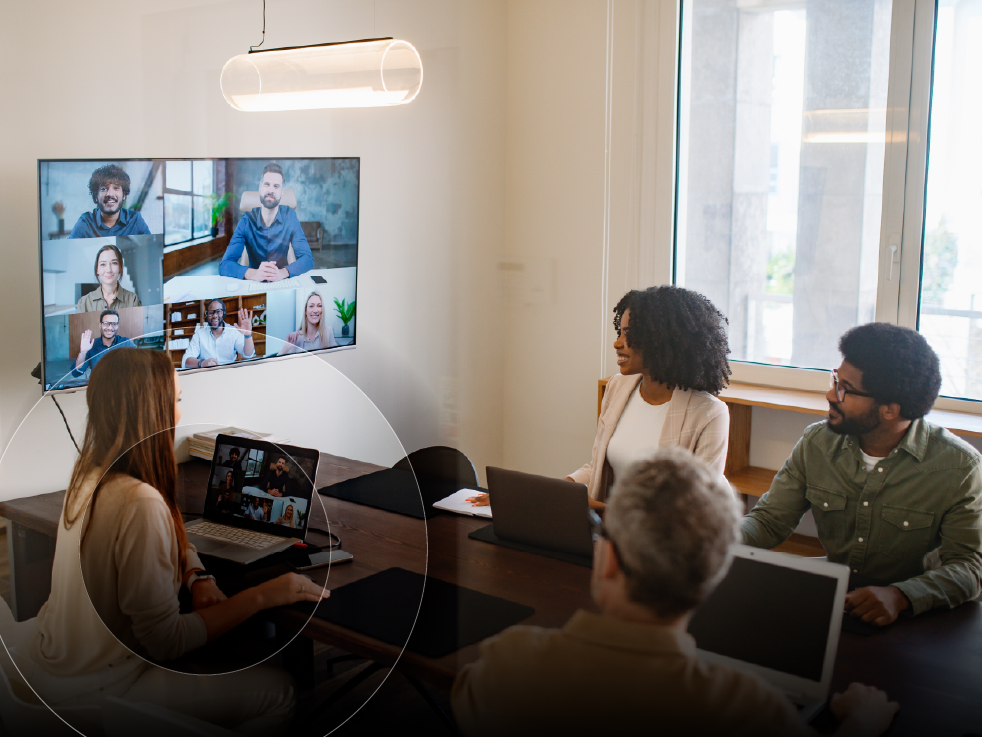 Seeing the big picture: What is the future of collaboration in the hybrid workplace?:
Make your modern workplace successful for the long term.Reading Time: 5 minutesMake your modern workplace successful for the long term.
Read More -
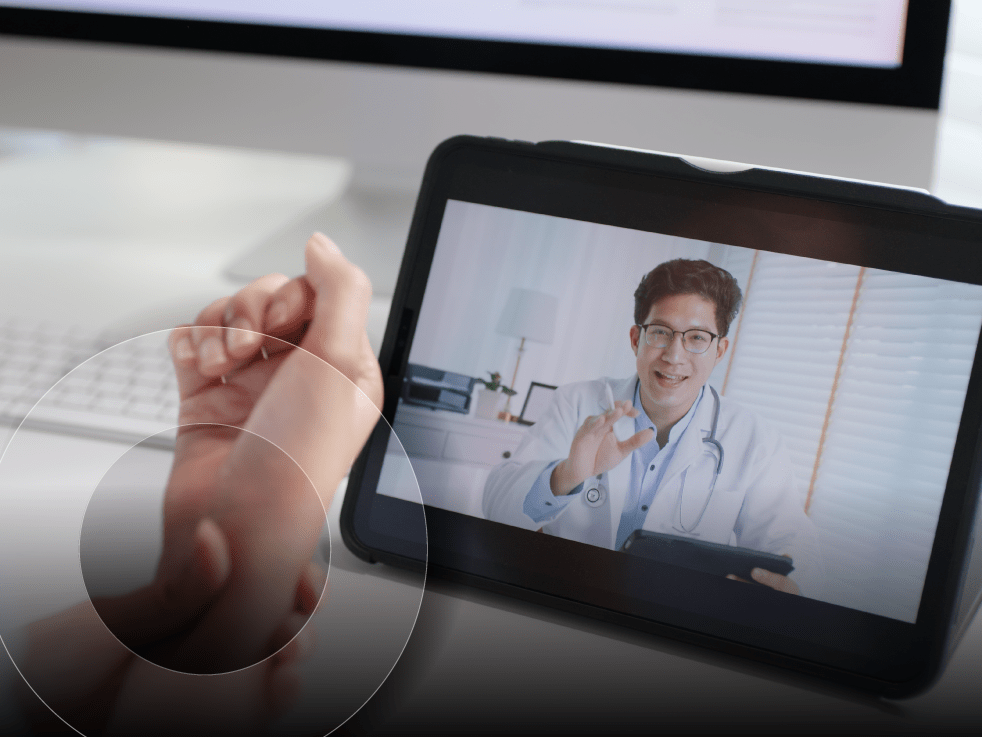 How improving clinical mobility helps achieve Quintuple Aim:
To foster great patient and clinician experiences, start by modernizing the devices your people rely on.Reading Time: 5 minutesTo foster great patient and clinician experiences, start by modernizing the devices your people rely on.
Read More -
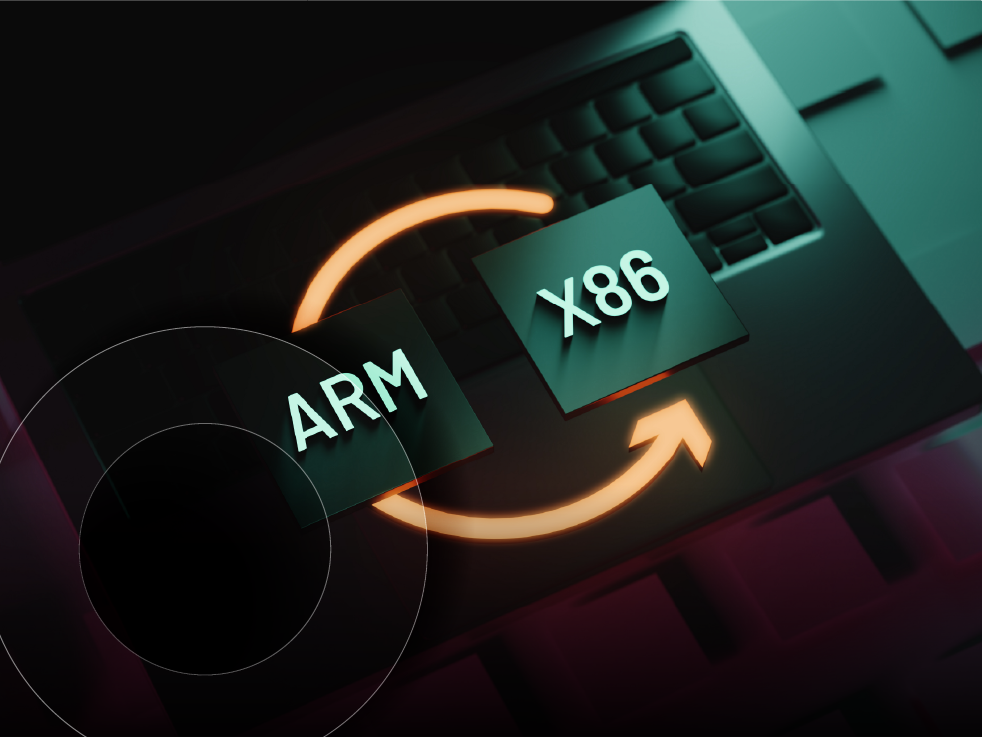 Experts are betting big on PCs with ARM processors. Should you?:
SHI’s experts agree: ARM is a computing revolution. It could even mean the end of x86.Reading Time: 4 minutesSHI’s AI and EUC experts agree: ARM is a computing revolution. It could even mean the end of x86.
Read More